


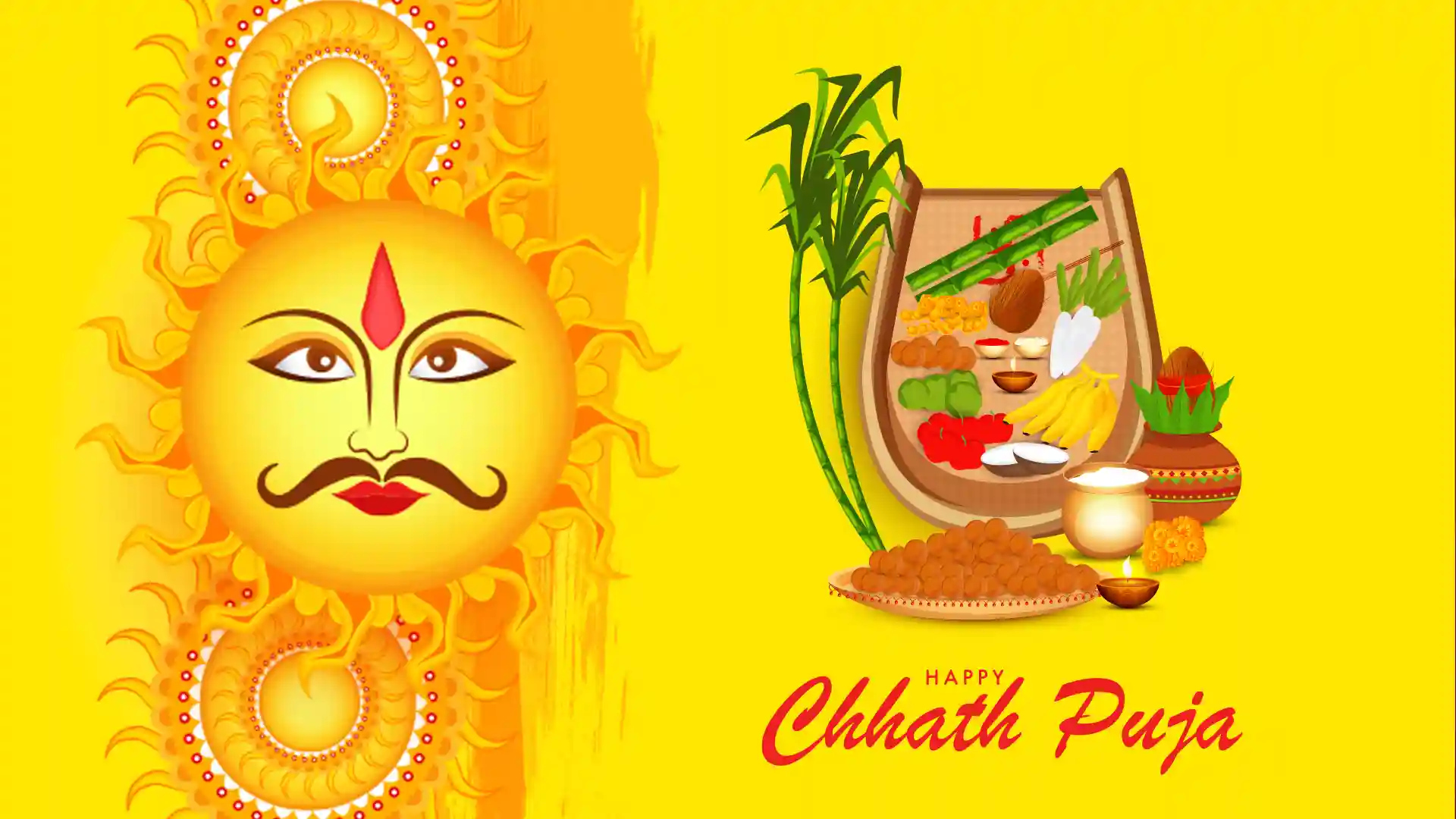
As the sun begins to set, families gather along riverbanks with baskets of fruits, traditional sweets and earthen lamps. Devotional songs fill the surroundings as worshippers stand in the water, waiting to offer their prayers.
This is a familiar sight during Chhath Puja, one of India's most cherished festivals. Celebrated with devotion and simplicity, it brings families together to express gratitude towards nature and pray for good health and prosperity.
But what makes this festival special, and why are prayers offered to both the setting and rising sun? Let's explore its meaning, traditions and celebrations.
Chhath Puja is a four-day Hindu festival dedicated to Surya Dev (the Sun God) and Chhathi Maiya, who is associated with the protection and well-being of children. It is primarily celebrated in Bihar, Jharkhand, eastern Uttar Pradesh and parts of Nepal, with celebrations extending to other regions.
The name 'Chhath' comes from the Sanskrit word Shashthi, meaning sixth, referring to the sixth day of the waxing Moon in the Hindu month of Kartik.
The answer to why is Chhath Puja celebrated lies in its connection with gratitude and well-being. The Sun sustains life, supports agriculture and provides energy essential to nature. Through this festival, devotees express their appreciation and seek blessings for their families' health, happiness and prosperity.
Chhath Puja has roots in ancient traditions of sun worship, although its exact origins remain uncertain. Several popular stories connect the festival with Hindu mythology.
One belief associates it with Lord Rama and Goddess Sita, who are said to have worshipped the Sun after returning to Ayodhya. Another links the tradition to Draupadi, who is believed to have prayed to Surya Dev during the Pandavas' exile.
Karna, known for his devotion to the Sun God, is also associated with the practice of offering prayers while standing in water.
These stories have been passed down through generations, adding to the festival's cultural and religious heritage.
In 2026, Chhath Puja begins on Friday, 13 November and concludes on Monday, 16 November. The main celebration, featuring offerings to the setting sun, takes place on Sunday, 15 November.
The festival follows four important days:
13 November (Friday): Nahay Khay
14 November (Saturday): Kharna
15 November (Sunday): Sandhya Arghya
16 November (Monday): Usha Arghya and Parana
The exact sunset and sunrise timings for the offerings vary by location.
How is Chhath Puja Celebrated? Four Days of Rituals
Each day follows a distinct set of customs, beginning with preparations and concluding with prayers at sunrise.
The festival begins with a ritual bath and thorough cleaning of the home and cooking areas. Devotees prepare a simple vegetarian meal, traditionally including rice, bottle gourd and chana dal. The focus is on cleanliness, preparation and beginning the observance with discipline.
On the second day, devotees fast until evening. After sunset, devotees offer prayers and consume prasad such as jaggery-based rice kheer and roti before beginning the 36-hour nirjala fast.
The third day is among the most significant. Families gather near rivers, ponds or designated ghats with baskets of fruits, sweets, kalash and other puja essentials. Devotees stand in water and offer arghya to the setting sun. The ceremony includes prayers and traditional songs, with family members participating in the arrangements.
Before sunrise, devotees return to the water to offer prayers to the rising sun. This marks the completion of the main rituals. The fast is then broken through a practice called Parana, followed by the distribution of prasad among family members and the community.
The chhath puja significance extends beyond its four-day rituals. The celebration reflects several values rooted in Indian traditions.
Gratitude Towards Nature: Worshipping the Sun acknowledges the importance of sunlight, water and natural resources in sustaining life.
Respect for Every Phase of Life: Offering prayers to both the setting and rising sun symbolises appreciation for endings and new beginnings.
Discipline and Devotion: Fasting, cleanliness and careful preparation highlight the commitment involved in observing the festival.
Family and Community Bonds: From preparing offerings to visiting the ghats, the celebrations encourage participation across generations.
Food and natural offerings are central to the celebrations. Families prepare prasad with care, following customs passed down through generations.
Common offerings include:
Thekua: A traditional sweet prepared using wheat flour, jaggery or sugar and ghee.
Seasonal Fruits: Bananas, coconuts and other fruits arranged in bamboo baskets.
Sugarcane: Included among the offerings and used in traditional arrangements at the ghats.
Rice Laddoos: Known as kasaar or ladua in regional traditions, these are prepared as prasad.
Earthen Diyas: Used during prayers and festive arrangements.
Flowers: Fresh flowers, including marigolds, are used to decorate puja arrangements and during prayers.
The emphasis remains on simplicity, cleanliness and devotion rather than elaborate preparations.
Silver is considered auspicious in Indian traditions, be it silver idols in puja rooms, decorative articles used during religious ceremonies or gifts exchanged on festive occasions. During Chhath Puja, families can also mark the celebration with thoughtful gifts such as traditional puja thalis, festive décor, sweets and precious metals. Silver coins and bars make a meaningful choice for those looking to gift something with lasting value.
At MMTC-PAMP, you can explore a collection of 999.9+ pure silver coins and bars, including designs featuring religious motifs and symbols of prosperity. Crafted with positive weight tolerance, these collectibles are a thoughtful way to celebrate Chhath Puja and honour the occasion with a precious keepsake.
Yes. Families can perform the rituals at home using a clean water-filled tank or temporary pool if a river or pond is not accessible.
Yes. Kartik Chhath is celebrated after Diwali, while Chaiti Chhath takes place during the Hindu month of Chaitra, generally in March or April.
Traditional songs preserve regional customs, express devotion and bring families together during preparations and prayers.
No. Family members can participate by preparing prasad, arranging offerings and joining prayers without undertaking the main fast.
Traditional puja thalis, festive décor, sweets and silver coins or bars are thoughtful gifting options for Chhath Puja. Silver items are particularly valued for their auspicious significance and lasting value.
Chhath Puja is a four-day Hindu festival dedicated to Surya Dev (the Sun God) and Chhathi Maiya, who is associated with the protection and well-being of children. It is primarily celebrated in Bihar, Jharkhand, eastern Uttar Pradesh and parts of Nepal, with celebrations extending to other regions.
Diwali brings families together, filling homes with celebrations, laughter and the joy of exchanging gifts. Gold has always been a cherished part of these traditions, whether purchased for loved ones or to mark a special occasion. This year, there's a new way to make festive gifting even more personal.
Artificial intelligence is changing more than how people use technology. It is also influencing demand for the materials used to build and operate the infrastructure behind it. As technology companies expand their data centres, demand for powerful processors, networking equipment and electrical systems is growing. Silver is used in several of these components because of its exceptional electrical and thermal conductivity.