


Gold around your neck is easy to spot. Gold inside your phone? Not so much.
While jewellery and bullion such as gold coins and bars are among its most familiar forms, gold also turns up in places that have little to do with ornamentation. It helps electronic connections work, protects equipment in space and appears in everything from eyewear to dentistry.
The different uses of gold become much more interesting once you look beyond the jewellery box.
Gold is not used in different industries simply because it is valuable.
It conducts electricity effectively and resists corrosion, making it useful for reliable electrical connections. It is highly malleable, so it can be beaten into extremely thin sheets. Gold also reflects infrared radiation, which makes thin coatings useful for managing heat and radiation.
These properties allow a tiny quantity of gold to perform a specific job without the entire product being made from the metal. In fact, electronics alone accounts for around 80% of the gold used across the technology sector.
So, where does all that gold actually end up?
From pieces you wear every day to components hidden deep inside machines, here are 10 things made of gold or containing the metal in some form.
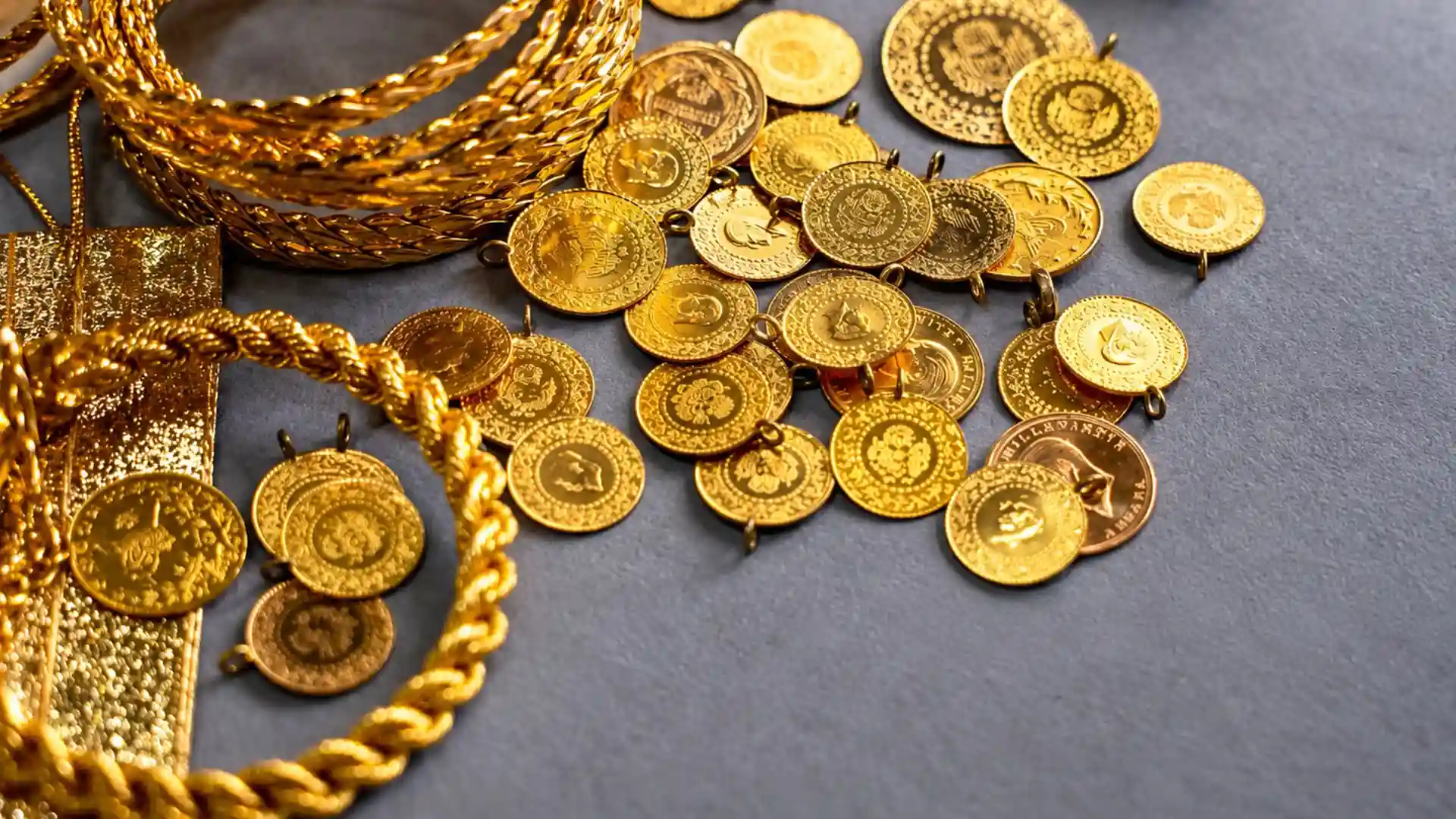
Jewellery remains one of the most familiar things that are made of gold. Gold pendants, rings, necklaces, earrings, bangles and bracelets use gold because it can be shaped into intricate designs and retains its distinctive appearance. Pure gold is soft, so jewellery commonly uses gold alloys to provide the required strength. Gold's malleability also allows it to be worked into detailed forms without losing its character.
Gold bars and coins are another widely recognised form of physical gold. These are available in different weights and designs for buying, owning and gifting. Weight and purity are key considerations in how these products are produced and identified.
Gold also appears across a wider range of wearable accessories. Watch cases, straps, spectacle frames, cufflinks and buckles can be made from gold or finished with a layer of gold. Solid gold is used in selected pieces, while gold plating applies a thin layer of the metal over another material. This allows gold to become part of fashion in forms that extend beyond conventional jewellery.
A surprising amount of gold sits inside devices where you never actually see it. Smartphones, laptops, televisions and other electronics use small quantities of gold in connectors, contacts, switches and semiconductor components. Gold conducts electricity effectively and resists corrosion, helping maintain reliable electrical connections in compact electronic systems.
Modern vehicles contain increasingly sophisticated electronic systems, and gold has a role in several of them. Small quantities are used in selected connectors, sensors, control units and semiconductor components. These parts support functions ranging from navigation and safety systems to entertainment and electronic controls. Gold is useful here because electrical connections need to remain dependable over time.
Gold also has applications far beyond Earth. Thin gold coatings are used on selected satellites and spacecraft because they reflect infrared radiation and help manage heat. Similar coatings can appear on astronaut visors to reduce exposure to intense solar radiation and glare. Gold can be applied in extremely thin layers, making it suitable for applications where surface performance matters more than quantity.
Dentistry is another long-standing use of gold. Gold and gold alloys have been used in crowns, bridges, inlays and other restorations because the metal can be shaped precisely and resists corrosion. Other dental materials are now widely used, but gold continues to have a recognised place in specialised restorative work.
Gold is also used in selected areas of medicine and diagnostics. Gold-based compounds and materials appear in specialised therapeutic, diagnostic and medical-device applications. Gold can also be engineered into extremely small particles for specific scientific and medical purposes. In such applications, only a very small amount of the metal may be required to perform a highly specific function.
Gold can even appear in surfaces that do not immediately look metallic. Gold compounds are used to create rich red tones in certain decorative glass. Thin gold coatings can also reflect infrared radiation in specialised glazing. Gold leaf is another familiar application. Because gold can be beaten into extremely thin sheets, it is used on artwork, frames, domes, statues, architectural details and religious structures.
Gold can also appear on food as decoration. Food-grade gold leaf and flakes are used on selected chocolates, sweets, cakes and other dishes to create a distinctive visual finish. Only gold specifically produced and approved for food use should be consumed. Decorative gold intended for craft or jewellery applications is not the same as edible gold.
A necklace, computer chip and satellite do not appear to have much in common. Gold connects them because the metal changes roles remarkably well. Its appearance matters in jewellery and fashion accessories. Its conductivity and corrosion resistance matter in electronics. Its reflectivity matters in aerospace and speciality glass. Its malleability allows it to become everything from intricate ornaments to almost weightless gold leaf. That is why the list of products containing gold stretches far beyond objects that look golden from the outside.
Gold appears in many forms, from coins and bars to electronics, eyewear, dental applications, buildings and spacecraft. Each use draws on a different property of the metal, whether it is conductivity, malleability, corrosion resistance or reflectivity.
MMTC-PAMP offers 24K gold coins and bars across different weights and designs for those looking to own physical gold. Beyond bullion, the wider uses of gold show how the metal continues to play a role across everyday products, technology and specialised applications.
Gold is used in small quantities because it conducts electricity well and resists corrosion, which helps maintain reliable connections.
Yes. E-waste such as phones and computers can contain recoverable gold, although extraction requires specialised recycling processes.
A thin gold layer can provide properties such as corrosion resistance, conductivity or reflectivity without using a large amount of the metal.
No. The purity depends on the application. Gold may be alloyed with other metals or applied as a thin coating depending on the required strength and function.
Gold can be separated, refined and reused, which allows the metal to return to the supply chain instead of being discarded.
Its combination of conductivity, corrosion resistance, malleability and reflectivity makes it suitable for applications where consistent performance matters.
While jewellery and bullion such as gold coins and bars are among its most familiar forms, gold also turns up in places that have little to do with ornamentation. It helps electronic connections work, protects equipment in space and appears in everything from eyewear to dentistry.
Gold purity is commonly shown as 24K, 22K, 999 or 999.9. But these numbers cannot be confirmed by looking at the colour, shine or weight of gold. They need to be tested. This testing process is called gold assaying. The result of which helps determine its purity and supports processes such as refining and hallmarking.
Look closely at a piece of gold and you may find tiny numbers, letters or symbols stamped on it. A jewellery piece may show 22K 916 or 18K 750. A gold bar may carry 999 or 999.9. Hallmarked jewellery in India also carries a BIS mark and HUID.