


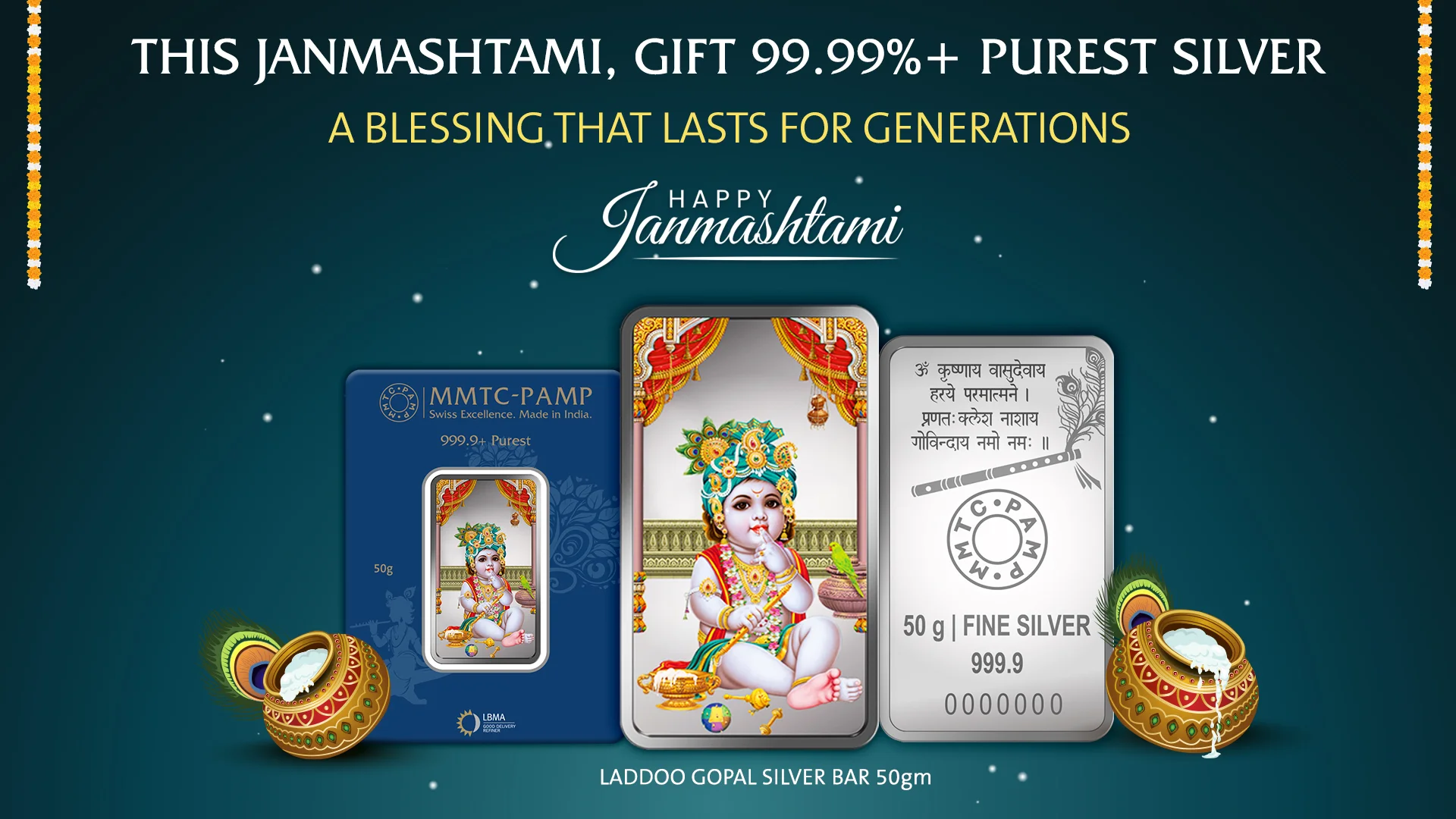
Janmashtami marks the birth of Lord Krishna and celebrates devotion, joy and his enduring teachings. Across India, families prepare to welcome Laddoo Gopal with devotion and festive rituals. Homes are decorated with flowers, temples are illuminated and devotional songs and bhajans fill the celebrations. Whether celebrated simply at home or on a larger scale, Janmashtami is an occasion to reconnect with traditions and share blessings with loved ones. What better way to do that than by blending spiritual rituals with timeless gifts like gold coins and bars, and pure silver items that symbolise wealth, purity, and protection?
Janmashtami falls on the eighth day (Ashtami) of the Krishna Paksha in the month of Bhadrapada. It is believed that Lord Krishna, the eighth avatar of Vishnu, was born at midnight to vanquish evil and restore dharma (righteousness). Lord Krishna’s life and teachings continue to represent devotion, wisdom, duty and inner strength.
From charming stories of his childhood mischief to his wise teachings in the Bhagavad Gita, Lord Krishna's presence inspires people of all ages. This is why his birthday is celebrated with such deep faith and joy in millions of homes.
You don't have to host a big event to celebrate Janmashtami. A few heartfelt steps can make the day memorable:
Cleanse and decorate your puja space with flowers, leaves, and rangoli. Set up a small swing (jhoola) or cradle for Bal Gopal.
Perform abhishek (holy bath) for your Lord Krishna idol using milk, honey, ghee, curd, and water.
Dress up the idol in new clothes, jewellery, and a tiny crown with a peacock feather.
Prepare bhog like butter, mishri, panjiri, kheer, and fruits are some of Lord Krishna's favourites.
Sing bhajans and perform aarti around midnight to welcome the birth of the Lord.
Decorations inspired by Lord Krishna can further add to the devotional and festive atmosphere at home:
Alongside rituals and gifts, make your home come alive with Lord Krishna-themed decorations:
Use peacock feathers, flutes, and blue-themed drapes for a divine feel.
Set up small Lord Krishna jhankis (tableaux) showing moments from his life.
Add lights, bells, and diyas to brighten your space and welcome Lord Krishna with warmth.
Janmashtami is a time when you can choose gifts that feel festive, auspicious and memorable. Gold and silver coins and bars with devotional and symbolic motifs can add meaning to the celebration while also becoming keepsakes.
The banyan tree symbolises strength, longevity and continuity. Gifting the Banyan Tree Silver Coin is a meaningful way to wish someone stability, prosperity and lasting blessings.
Flowers are linked with celebration, devotion and heartfelt good wishes. The Bouquet of Flowers Silver Bar works well for festive gifting and expresses warmth, joy and best wishes during Janmashtami.
The rose represents affection, grace and appreciation. As a Janmashtami gift,** Rose Gold Bar** adds an elegant touch while carrying the sentiment of love and respect.
The peacock has a strong connection with Lord Krishna through the peacock feather on his crown. The Peacock Gold Bar beautifully captures that symbolism and makes a festive choice that reflects beauty, spirituality and joy.
Gold and silver gifts can add lasting meaning to Janmashtami when they reflect purity, tradition and auspicious symbolism. MMTC-PAMP offers 999.9+ purest gold and silver coins and bars in thoughtfully crafted designs, making them suitable for marking the occasion with something of lasting value. With a strong focus on purity, precision and craftsmanship, MMTC-PAMP offers a trusted range of Janmashtami gifts for family and loved ones.
Janmashtami is a Hindu festival that marks the birth of Lord Krishna, the eighth avatar of Lord Vishnu. It is celebrated with fasting, puja, bhajans and midnight prayers.
Janmashtami is celebrated to honour the birth of Lord Krishna. According to Hindu belief, he was born to protect dharma and defeat evil.
Lord Krishna is the eighth avatar of Lord Vishnu and an important deity in Hinduism. He is known for his childhood in Braj, his role in the Mahabharata and his teachings in the Bhagavad Gita.
Janmashtami is celebrated at midnight because Lord Krishna is believed to have been born at that time. Devotees mark the moment with puja, aarti, bhajans and prayers.
Janmashtami is also known as Gokulashtami, Krishnashtami, Ashtami Rohini, Sree Jayanti and Saatam Aatham in different parts of India.
Janmashtami falls on 4 September 2026. The exact puja timings can vary by location and local panchang.
The Janmashtami fast is observed as an act of devotion to Lord Krishna. Many devotees avoid grains and eat fruits, milk or other permitted foods, breaking the fast after the midnight puja or the next morning.
Gold is still commonly discussed in tolas in Indian households. A family might talk about gifting 5 tolas at a wedding or buying 10 tolas for a special occasion. But when you actually check gold coins, bars or current gold rates, the weight is usually shown in grams.
An 18K gold product tells you something about the gold. A 1-carat diamond tells you something about the stone. The words sound almost the same, but they measure completely different things.
Digital gold return is the gain or loss on the amount you have invested in digital gold. Digital gold does not earn interest. Its value changes with gold prices, while the amount you receive on sale depends on the provider's current sell price.