


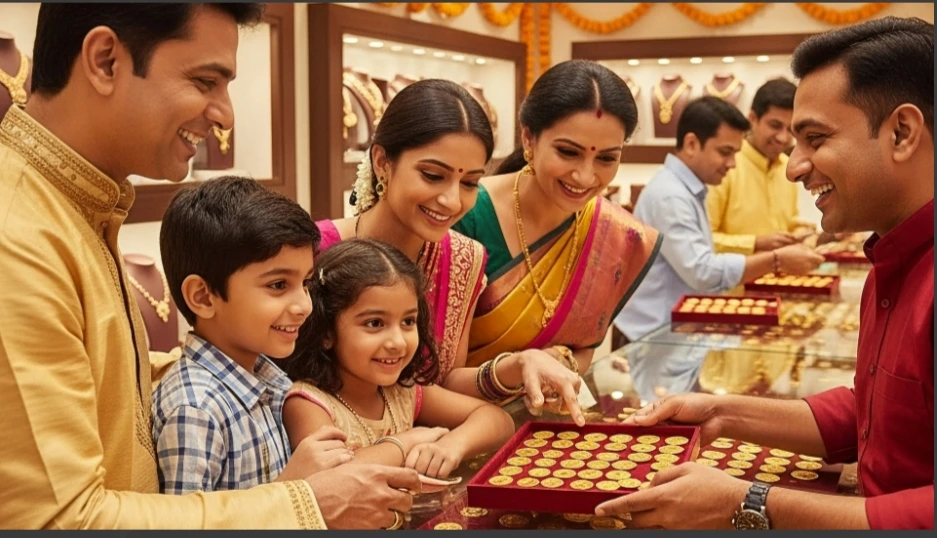
Dhanteras marks the beginning of Diwali and is associated with health, prosperity and auspicious beginnings. The day is also closely linked with the custom of buying gold, silver and other metals.
But the tradition goes beyond making a festive purchase. Its meaning comes from the stories, rituals and beliefs connected with Dhantrayodashi. In this blog, we look at the history of Dhanteras, why gold became part of the celebration and what the tradition represents today.
Dhanteras is also known as Dhantrayodashi. It falls on the Trayodashi Tithi of Krishna Paksha in the Hindu month of Kartik and marks the first day of Diwali celebrations. The occasion is associated with Lord Dhanvantari, Goddess Lakshmi and Lord Kubera.
Lord Dhanvantari represents health and Ayurveda, while Goddess Lakshmi and Lord Kubera are associated with wealth and abundance. This gives Dhanteras a wider meaning that brings together well-being and material prosperity.
Several legends are connected with Dhanteras. Two of the most widely known explain the festival's links with health, protection and precious metals.
According to Hindu tradition, Lord Dhanvantari emerged during the Samudra Manthan, or churning of the ocean, carrying a pot of amrit. His appearance is associated with healing, health and Ayurveda. This is why the day is also observed as Dhanvantari Jayanti in many parts of India. Goddess Lakshmi is also linked with the Samudra Manthan tradition, strengthening the festival's connection with abundance and good fortune.
Another popular legend tells the story of King Hima's son, who was predicted to die from a snake bite shortly after his marriage. On the predicted night, his wife kept him awake, placed jewellery and precious metals near the entrance and lit lamps around them. According to the story, Yama arrived in the form of a serpent but was unable to enter. The legend is linked with Yama Deepam, a ritual in which a lamp is lit outside the home on Dhanteras as a prayer for protection and long life.
Gold has long held cultural and financial importance in Indian households. It is bought for weddings, festivals, family milestones and long-term ownership. Dhanteras brought this existing significance together with the idea of bringing something valuable into the home on an auspicious day.
Over time, purchasing gold or silver became one of the most recognised Dhanteras customs. The amount does not have to be large. Families may buy jewellery, a small coin, a bar or another metal item depending on their tradition and purpose.
Gold on Dhanteras is linked with continuity, value and abundance. Its connection with Goddess Lakshmi gives it religious meaning, while its ability to be stored, gifted and passed down gives it practical value. This combination explains why gold continues to hold a prominent place in Dhanteras celebrations even as buying habits change.
Celebrations vary across households and regions. Homes are cleaned and decorated before Diwali. Diyas and rangoli are commonly placed around entrances and prayer areas. Families perform prayers dedicated to Goddess Lakshmi, Lord Kubera and Lord Dhanvantari. Yama Deepam is also observed in many homes. Another common practice is purchasing something new. This can include gold, silver, utensils or other metal objects.
The tradition remains the same, but buyers now have more ways to follow it. Jewellery can suit buyers looking for something wearable or connected with a future family occasion. Gold coins can work for gifting or smaller physical gold purchases. Bars are another option for those primarily interested in holding physical gold. Coins and bars can also be purchased online from refiners, jewellers and authorised sellers. Before buying, check the stated purity, exact weight and final price. For jewellery, look for the applicable BIS hallmark details. For coins and bars, review the product information, packaging and refinery or mint behind the product. Always retain the invoice after purchase.
Dhanteras is considered an auspicious day to buy gold, but that does not mean prices will necessarily be lower. Gold rates move according to domestic and international market factors. A festive purchase should therefore be based on its purpose and the amount you are comfortable spending rather than expectations about short-term price movement.
Buying gold on Dhanteras continues to hold meaning because it connects a centuries-old festive custom with an asset families can preserve, gift or pass on. When choosing physical gold, look beyond the design. Purity, weight, pricing and the refinery behind the product also deserve attention.
MMTC-PAMP offers gold coins and bars crafted in 24K 999.9+ pure gold with positive weight tolerance, across different weights and designs. A Goddess Lakshmi gold coin, bar or pendant can be especially meaningful for Dhanteras, reflecting the festival’s association with prosperity and abundance. It can also become part of the puja, a festive keepsake or a thoughtful gift.
It depends on the purpose. Coins suit gifting and physical gold ownership, while jewellery also includes design and making charges.
No. It is a cultural custom. Families also buy silver, utensils or other metal objects and observe the day through prayers and rituals.
Yes. Ensure you look at purity, weight and refinery details, confirm the final price and invoice details before completing the purchase.
Yes. The muhurat has religious significance, but gold purchases can be made at any time based on convenience and availability.
Dhanteras is also known as Dhantrayodashi. It falls on the Trayodashi Tithi of Krishna Paksha in the Hindu month of Kartik and marks the first day of Diwali celebrations. The occasion is associated with Lord Dhanvantari, Goddess Lakshmi and Lord Kubera.
A beautiful necklace for the bride, gold coins for Diwali or a pair of bangles to mark a family celebration. Gold shopping is an important part of India's festive and wedding traditions, and these purchases come with considerable excitement.
A digital gold SIP is a recurring purchase feature within the existing digital gold service. Users decide the amount they want to purchase with each instalment and select how frequently those purchases should take place.