


Key Insights
Precious metals add balance to a long-term portfolio. Gold supports stability, while silver contributes to growth over time. When used in the right proportion, they can strengthen overall returns across different market phases. A long-term approach allows precious metals to support steady wealth building in a simple and reliable way.
Precious metals have been part of personal wealth for a long time. While they are often discussed during periods of uncertainty, their relevance extends beyond short-term protection. When used thoughtfully, they add balance, stability and resilience to a portfolio.
The value of precious metals does not come from quick gains. In fact, it comes from how they perform across different economic cycles. This helps in using them effectively as part of a long-term strategy.
Why precious metals hold their value over time
Precious metals, such as gold and silver, are finite resources. Their supply increases slowly and they cannot be produced at will. This is one reason they tend to hold value over long periods.
Another factor is independence. Precious metals do not rely on corporate profits, interest rates or a single country’s economy. When inflation rises or currencies lose purchasing power, metals often respond differently from stocks and bonds. This helps them play a stabilising role in a long-term portfolio.
Over time, this stability can support overall growth by reducing sharp losses during weak market phases.
Understanding growth in the context of precious metals
Growth from precious metals does not come from regular income. Metals do not pay interest or dividends. Their contribution comes from price appreciation and portfolio protection.
For example, gold prices may remain steady for years and rise when inflation increases or global uncertainty grows. Investors who hold gold patiently often benefit during such phases. Over a long horizon, this pattern can improve overall portfolio outcomes even if metals do not rise every year.
Silver and platinum add another dimension. Their prices are influenced by industrial use in areas such as electronics, energy, healthcare and transportation. As these sectors expand, demand for these metals can increase. Thus, creating long-term growth potential alongside higher price movement.
How much allocation makes sense for long-term investors
There is no single percentage that suits every investor. Allocation depends on income stability, time horizon and comfort with price fluctuations. However, most long-term portfolios treat precious metals as a supporting asset rather than a core holding.
A widely used approach includes the following ranges:
Around 5% for investors seeking basic diversification and stability
Around 10% for those concerned about inflation and currency weakness
Up to 15% for investors with higher exposure to equities who want added balance
Allocating too much to metals can limit participation in growth assets. Allocating too little may reduce their stabilising effect. The objective is balance, not precision.
Choosing the right mix of precious metals
Each metal serves a different purpose within a long-term strategy.
Gold is usually the foundation. It tends to be less volatile and is widely held by central banks. Its demand is driven more by monetary factors than industrial use, which helps during economic stress.
Silver offers higher growth potential but also higher price swings. Its extensive industrial use makes it sensitive to economic expansion and technological trends.
Platinum and palladium are more specialised. Their prices depend heavily on industrial demand and supply concentration. They can offer opportunities but carry higher risk.
Investors can choose a combination of gold and silver.
Ways to invest in precious metals over the long term
The method of ownership influences cost, liquidity and risk. Common approaches include:
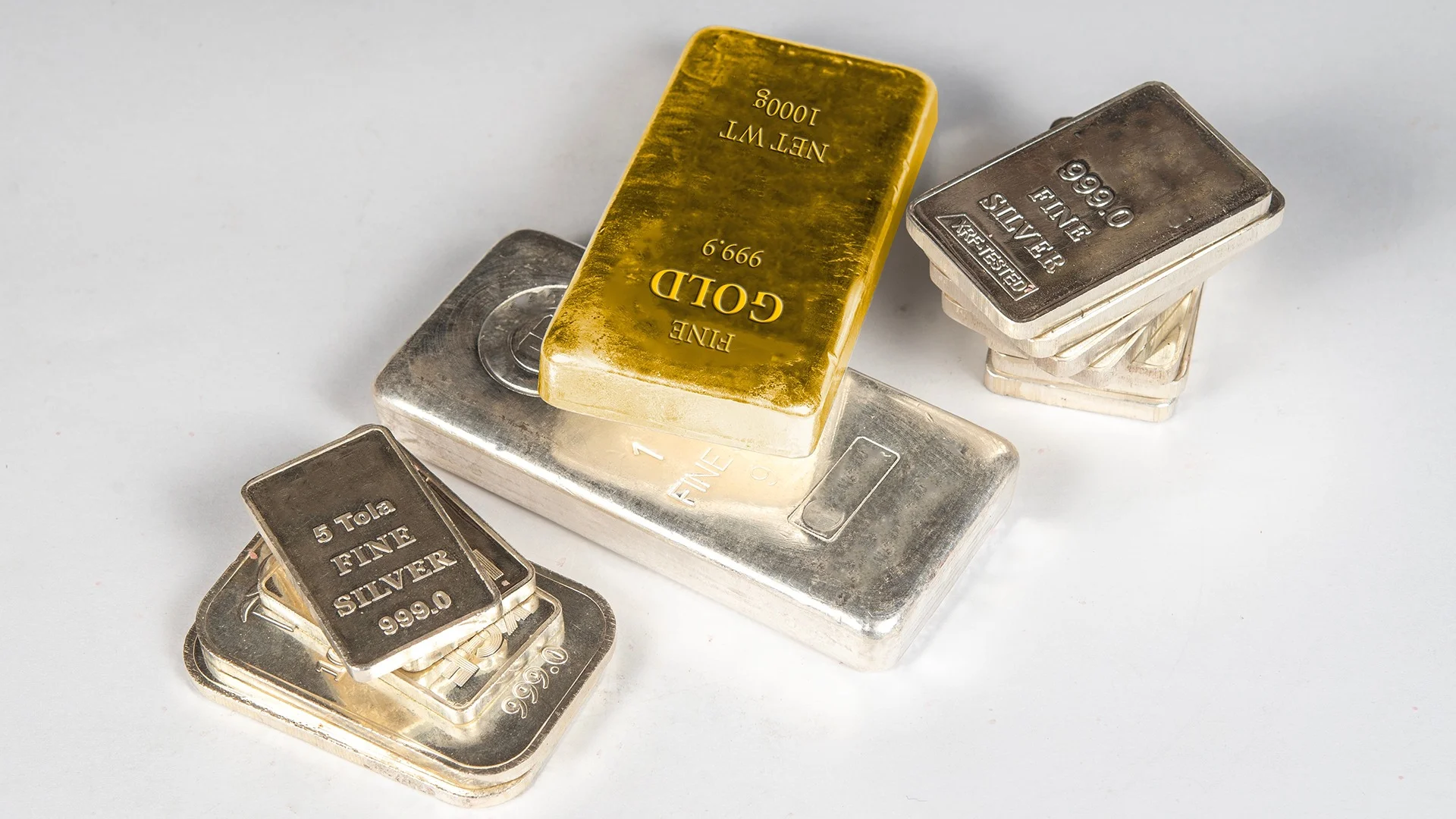
Physical metals such as coins and bars, which offer direct ownership and remove reliance on financial institutions. Storage and insurance must be planned carefully.
Market-linked options such as gold funds or exchange-traded products, which track metal prices without physical handling. These are easier to buy and sell but depend on custodians and fund structures.
A combined approach, where physical metals are held for long-term security and financial products are used for flexibility and portfolio adjustments.
The right choice depends on liquidity needs, convenience and long-term intent.
Handling price movements with discipline
Precious metals often move in cycles. Prices may remain flat for extended periods and then rise sharply. This behaviour requires patience.
Long-term investors benefit from the following practices:
Reviewing metal allocation periodically rather than daily
Reducing exposure slightly after sharp price increases
Adding gradually during price corrections instead of reacting emotionally
Tax and planning considerations
Tax treatment varies based on how precious metals are held and for how long. Physical metals, financial products and retirement-linked holdings may each follow different rules.
Investors should keep in mind liquidity and long-term access. Metals should align with broader financial goals such as retirement planning, emergency needs or wealth transfer. Planning these aspects early prevents forced decisions later.
Precious metals do not replace growth assets such as equities. Their strength lies in diversification, resilience and long-term balance. When used in moderation, they can help protect purchasing power. They further support steady portfolio growth across economic cycles.
A clear allocation strategy, the right mix of metals and patience during price fluctuations allow precious metals to play a meaningful role. They support long-term investing simple without adding unnecessary complexity.
Gold is still commonly discussed in tolas in Indian households. A family might talk about gifting 5 tolas at a wedding or buying 10 tolas for a special occasion. But when you actually check gold coins, bars or current gold rates, the weight is usually shown in grams.
An 18K gold product tells you something about the gold. A 1-carat diamond tells you something about the stone. The words sound almost the same, but they measure completely different things.
Digital gold return is the gain or loss on the amount you have invested in digital gold. Digital gold does not earn interest. Its value changes with gold prices, while the amount you receive on sale depends on the provider's current sell price.