


Key Insights
Projections for 2026 point toward continued sensitivity to industrial demand, supply constraints and macroeconomic conditions. While outcomes will depend on how these factors evolve, current signals suggest that silver’s role within the precious metals market is likely to remain under close and sustained focus.
Introduction
Silver has always occupied a distinctive position in the universe of precious metals. It functions both as a store of value and as a material that powers modern systems. What is changing now is the scale at which silver is being relied upon. As the precious metals market evolves, silver’s role is expanding beyond its traditional perception and becoming more central to how the market is being evaluated.
Looking ahead, silver is positioned to move from the background to the forefront. Its growing industrial relevance, combined with familiar investment characteristics, explains why silver is expected to play a more influential role in the precious metals landscape shaping 2026.
Recent performance reflects deeper forces
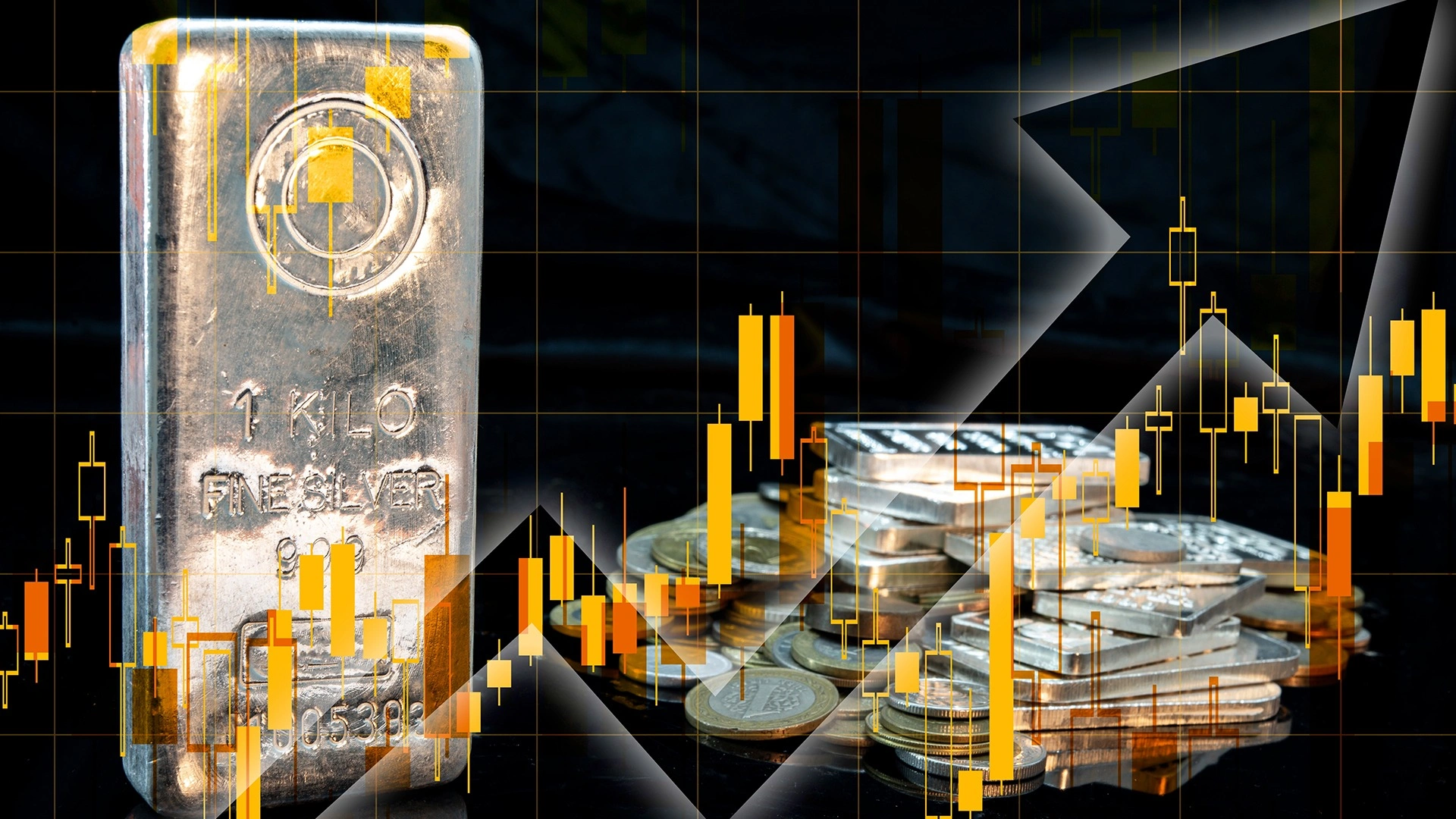
Silver’s recent price movement provides useful context. During 2025, silver prices rose sharply. The metal began the year near ₹79,352 per kilogram and closed the year above ₹2,06,000 per kilogram. This represented a rise of approximately 160% over the course of the year.
Such price performance typically reflects more than short-term sentiment. Strong moves of this magnitude tend to emerge when demand pressures build against limited supply and market expectations begin to adjust. By the time prices respond visibly, underlying structural factors are often already at work.
This shift in market behaviour has drawn attention to silver’s broader role within the precious metals market as participants look ahead rather than backward.
Industrial demand is becoming a defining driver
Silver differs from many precious metals in that it is actively consumed at scale. More than half of annual global silver demand now comes from industrial applications. These include electronics, renewable energy systems, electric mobility, medical equipment and advanced communication infrastructure.
Silver’s unmatched electrical conductivity makes it essential in high-performance applications. Although the quantity of silver used in individual devices is small, global manufacturing volumes turn these fractions into substantial aggregate demand. Data centres, communication networks and electronic components all rely on silver to function efficiently.
This industrial demand depends on how silver performs in key uses. In many applications, silver cannot be easily substituted without compromising performance. As technology penetration continues to expand across sectors, silver consumption increases steadily and persistently.
Clean energy reinforces long-term demand
The global transition toward cleaner energy systems has become one of the most significant demand drivers for silver. Solar energy is a clear example. Silver is a critical component in photovoltaic cells, where it is used to conduct electricity efficiently.
As solar capacity expands year after year, silver demand grows in parallel. This relationship is driven by long-term capacity expansion rather than short-term cycles. Energy transition commitments, infrastructure investment and long-term policy frameworks support continued expansion in renewable energy capacity.
Electric mobility adds another layer of demand. Silver is used in battery management systems, power electronics and charging infrastructure. While the amount of silver used per vehicle remains modest, rising adoption rates translate into sustained incremental demand over time.
Supply constraints remain persistent
Silver supply growth remains limited. A substantial portion of global silver production occurs as a byproduct of mining for other metals such as copper, lead and zinc. As a result, silver output is largely dependent on base metal production decisions rather than silver prices alone.
Even during periods of rising prices, production cannot be increased quickly unless broader mining activity expands. This structural limitation has contributed to multiple recent periods where global silver demand has exceeded newly mined supply.
When demand growth persists against inflexible supply, market sensitivity increases. This imbalance helps explain why silver often experiences more pronounced price movements compared to metals with more elastic supply profiles.
Silver’s position relative to gold
Gold continues to serve as the anchor of the precious metals market. Its price behaviour is primarily influenced by inflation expectations, interest rate trends and currency movements. Silver responds to these same macroeconomic forces, but its industrial exposure introduces an additional dimension.
Historically, silver has demonstrated higher price volatility than gold. During periods of economic expansion or technological acceleration, silver has often delivered stronger percentage gains. During corrections, it has also tended to retrace more sharply. This behaviour reflects silver’s dual identity rather than instability.
Rather than competing with gold, silver complements it by offering a different balance of growth sensitivity and monetary characteristics within the same asset class.
Investment interest continues to broaden
Beyond industrial consumption, investment demand for silver has increased. Physical holdings, exchange-traded products and retail participation have all contributed to this trend.
One factor influencing allocation decisions is relative valuation. Silver is often viewed as undervalued compared to gold on a historical ratio basis. While such comparisons are not predictive tools, they influence longer-term allocation discussions among market participants.
Accessibility also plays a role. Silver’s lower per-unit price allows participation without large capital commitments, supporting broader ownership during periods of heightened economic uncertainty.
Volatility as a function of responsiveness
Silver’s price volatility is frequently highlighted, but volatility should not be confused with fragility. Silver is highly responsive to changes in industrial demand, supply expectations, currency movements and investor sentiment.
Trade disruptions, geopolitical tensions and shifting tariff frameworks can all affect supply chains. During such periods, precious metals often attract attention as tangible assets. Silver, given its industrial exposure, tends to respond more visibly to these developments.
This responsiveness is a defining feature of silver’s role within the precious metals market.
Looking ahead, expectations for 2026 reflect the convergence of these forces. Industrial demand linked to clean energy and electrification is expected to remain firm. Supply constraints are unlikely to ease quickly. Investor behaviour will continue to be influenced by inflation trends, interest rate expectations and currency dynamics.
Under optimistic assumptions, some industry projections have referenced scenarios in which silver prices approach ₹3.5 lakh per kilogram. Such scenarios would imply gains of roughly 70% from recent reference levels. These figures are not forecasts, but illustrations of how sensitive silver prices can be when multiple supportive factors align.
What matters more than specific price levels is the structural direction of demand and supply.
A changing role within precious metals
Silver’s role in the precious metals market is evolving. It supports modern technology, underpins energy transition efforts and retains monetary relevance. Together, these functions place silver at the intersection of structural demand and long-term value.
As the market approaches 2026, silver is no longer positioned solely as a derivative of gold’s performance. It is increasingly shaping its own trajectory. This shift explains why silver’s role within the precious metals market is attracting closer attention and more serious consideration.
Gold is still commonly discussed in tolas in Indian households. A family might talk about gifting 5 tolas at a wedding or buying 10 tolas for a special occasion. But when you actually check gold coins, bars or current gold rates, the weight is usually shown in grams.
An 18K gold product tells you something about the gold. A 1-carat diamond tells you something about the stone. The words sound almost the same, but they measure completely different things.
Digital gold return is the gain or loss on the amount you have invested in digital gold. Digital gold does not earn interest. Its value changes with gold prices, while the amount you receive on sale depends on the provider's current sell price.